Quercetin is widely studied, but the human evidence is much smaller than its reputation suggests. One small randomised trial reported changes in several allergy-symptom scores with a phytosome formulation, while cardiovascular findings vary between studies and populations. Many broader ideas about antioxidant, anticancer and metabolic effects still come mainly from laboratory or animal research. Poor oral absorption and possible interactions with medicines also matter when comparing supplements.
Key takeaways:
- One four-week trial in 66 adults reported lower scores for several allergy symptoms with a 200 mg quercetin phytosome; this single, small study does not establish a generally accepted benefit.
- Cardiovascular studies have produced inconsistent results, with findings varying by population, formulation and endpoint.
- Most health effects claimed for quercetin, such as anticancer and neuroprotective benefits, are based on preclinical studies and lack human trial confirmation.
- Poor oral absorption remains a significant challenge, but formulations like phytosome and liposomal types can significantly improve plasma quercetin levels.
- When choosing supplements, prioritize products with transparent formulation labels, third-party testing, and clear ingredient lists, especially if interested in combining quercetin with bromelain.
Table of Contents
Quercetin research at a glance: what has actually been studied
Quercetin has attracted attention across wellness circles for years, but the claims attached to it do not carry the same evidential weight. Some findings come from small human trials; many others come entirely from cell cultures or animal studies and cannot be assumed to occur in people.
Here is how the main research areas break down by evidence type:
- Allergy symptoms — one small randomised controlled trial using a quercetin phytosome reported lower scores for eye itching, sneezing and nasal discharge than placebo.
- Oxidative and inflammatory pathways — laboratory and animal studies frequently report changes in these pathways; the significance for human health remains uncertain.
- Cardiovascular measures — human studies report mixed findings; some subgroups show changes in blood pressure or endothelial markers, while others show none.
- Metabolic and exercise recovery effects — human data remain limited and inconsistent, mostly from small trials with narrow populations.
- Neurological and cancer-related research — largely confined to animal and in vitro models, with no established preventive or therapeutic role in people.
The pattern here matters more than any single bullet point. Quercetin's antioxidant activity is well documented in laboratory settings, where researchers can control dosing and measure cellular effects precisely. Translating that into a measurable human health outcome is a different challenge entirely, and one the research hasn't fully solved for most of the categories above.
The allergy study is a useful exception to the largely preclinical literature because it tested a defined formulation in people. It is still only one short trial, and its result should not be generalised to every quercetin product.
Cardiovascular research tells a more fragmented story. A 2023 review found mixed but sometimes positive effects on blood pressure and endothelial markers, with outcomes depending heavily on which subgroup was studied and which formulation was tested. That's not a failure of the compound so much as a sign that quercetin's cardiovascular effects, if real, are probably modest and context-dependent rather than universal.
For metabolic and exercise-related claims, the honest summary is: not enough data yet. Small trials exist, but sample sizes are typically too low and durations too short to draw firm conclusions. Neuroprotective and anticancer research sits even further from clinical relevance. It's mechanistically interesting, frequently cited in review articles, and entirely preclinical at this stage. Nobody has demonstrated in a controlled human trial that quercetin prevents or treats cancer or neurodegenerative disease, and claiming otherwise would be inaccurate.
Which quercetin mechanisms have researchers studied?
Several possible mechanisms appear repeatedly in quercetin research. Most have been demonstrated in laboratory or animal models, so their clinical relevance remains uncertain.
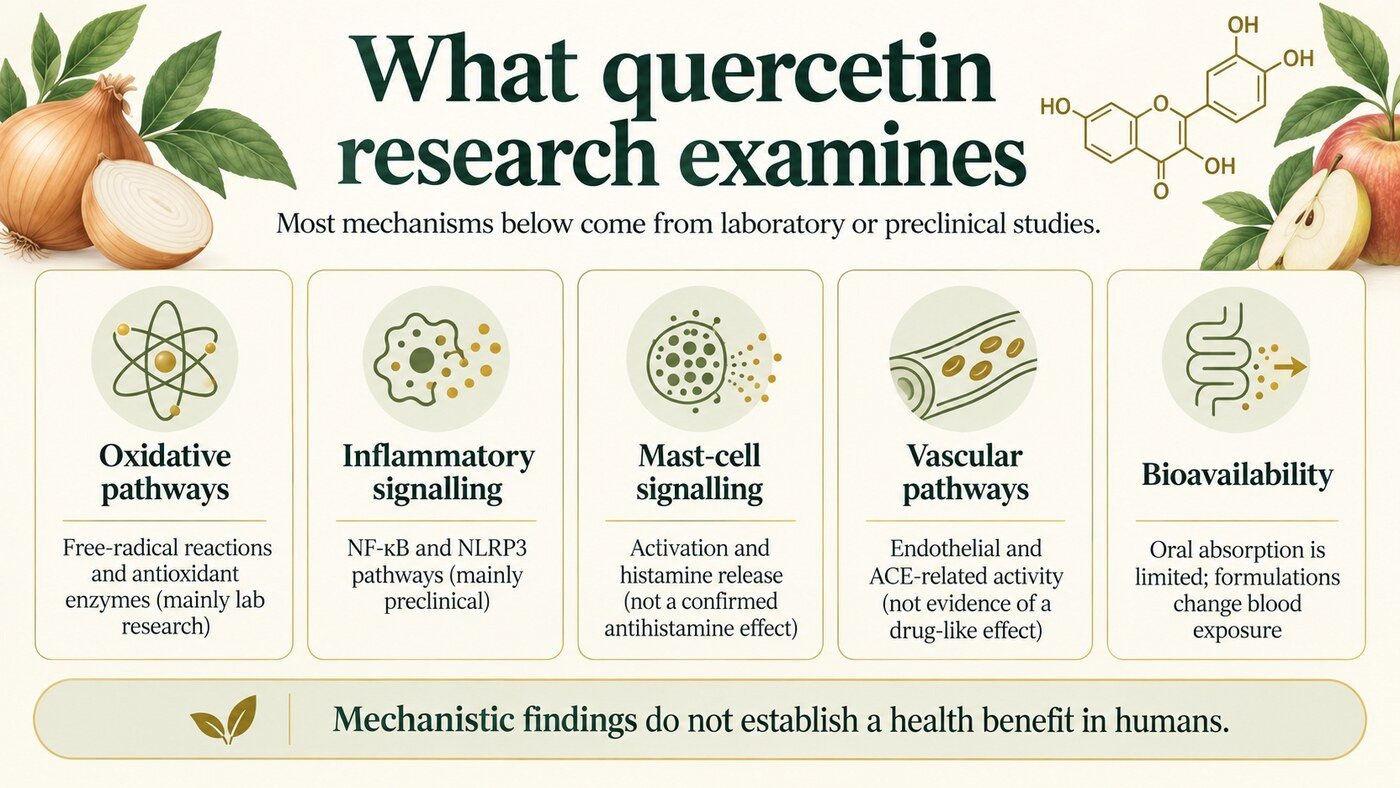
Antioxidant action is the most basic. Quercetin donates electrons to neutralise free radicals and, in laboratory studies, appears to support the body's own antioxidant enzyme systems rather than simply mopping up damage on its own. This dual action, direct scavenging plus support for endogenous defences, is part of why researchers have studied it so widely across numerous pharmacological contexts.
Anti-inflammatory signalling is the second major pathway. Quercetin appears to dampen activity in inflammatory signalling routes, including NF-κB and the NLRP3 inflammasome, both of which drive the production of inflammatory cytokines. A 2023 review describes this anti-inflammatory profile as one of quercetin's better-characterised properties in preclinical models, with some corroborating human biomarker data.
Mast-cell signalling has been studied mainly in laboratory and preclinical models. These experiments examine whether quercetin affects mast-cell activation and histamine release. They offer a possible biological explanation to investigate, not confirmation that an oral supplement has an antihistamine effect in people.
Vascular pathways have also been explored, including laboratory work on endothelial signalling and ACE-related activity. These are mechanistic observations, not evidence that quercetin acts like an ACE-inhibitor medicine or reliably lowers blood pressure when taken as a supplement.
Here's the catch that runs through almost all of this: most of these mechanisms are demonstrated at concentrations achievable in a test tube or in rodents given quercetin directly into the bloodstream, not necessarily at concentrations your body reaches after swallowing a capsule. Quercetin has notoriously poor oral bioavailability, meaning very little of what you consume actually reaches your blood in an active form. A 2022 review flags this bioavailability gap as one of the central obstacles preventing promising lab findings from reliably translating into human results. It's the reason formulation, not just dose, has become such a central theme in recent quercetin research, and it's the subject of two later sections in this article.
What do human clinical trials show about quercetin?
The human evidence for quercetin is smaller and more concentrated than the volume of preclinical research would suggest. That's normal for a compound this widely studied in cell and animal models, but it does mean readers should weigh trial quality carefully rather than assume decades of lab work automatically translate into proven human benefit.
A small trial measuring allergy-symptom scores
The most frequently cited human trial is a 2022 randomised, placebo-controlled study involving 66 adults with allergic symptoms. Participants took 200 mg daily of a bioavailable quercetin phytosome, a formulation bonded to phospholipids to improve absorption, for four weeks. The trial reported reductions in eye itching, sneezing, and nasal discharge compared with placebo.
Trial snapshot: 66 participants, daily dose, several weeks duration, bioavailable phytosome formulation, symptom-score endpoints (eye itching, sneezing, nasal discharge).
The trial is worth examining for two reasons. First, it used participant-reported symptom scores rather than objective biomarkers. Such scores can be clinically relevant, but they are more subjective than a blood test or imaging result. Second, the study tested a specific phytosome formulation designed to improve absorption, not ordinary quercetin powder. The result therefore cannot automatically be transferred to other formulations.
A four-week trial with 66 participants is a reasonable pilot study, but it's not the kind of large, multi-site trial that regulatory bodies typically want to see before endorsing a health claim. One trial of this size is a promising signal, not proof positive. It deserves attention precisely because it is one of the few quercetin studies with a clean placebo-controlled design and a defined, reproducible formulation, rather than because the sample size settles the question.
Cardiovascular findings are inconsistent
Cardiovascular research on quercetin follows a messier pattern. A 2023 review pulling together multiple smaller human trials found effects on blood pressure and endothelial function that were sometimes positive, but far from universal. Some trials found measurable improvements in specific subgroups, often people who started with elevated blood pressure or particular metabolic profiles. Other trials, testing different formulations or different populations, found no meaningful change at all.
Several factors likely explain this inconsistency:
- Formulation differences — plain quercetin and bioavailability-enhanced versions behave very differently once absorbed.
- Baseline health status — people with elevated blood pressure at the outset appear more likely to show measurable change than those starting from a normal range.
- Trial duration — many cardiovascular trials run for a matter of weeks, which may be too brief to capture slower vascular adaptations.
- Endpoint choice — some trials measure blood pressure directly, others measure endothelial function markers, and the two don't always move together.
This is where the distinction between symptom scores and objective biomarkers becomes genuinely useful. Blood pressure readings and endothelial function tests are objective, harder to influence through expectation or reporting bias than a symptom questionnaire. That gives cardiovascular findings a certain rigor that allergy symptom trials lack, even though the cardiovascular results themselves are less consistent. Neither type of evidence is inherently better; they simply answer different questions with different levels of confidence.
Taken together, short human trials have reported symptom or biomarker changes in some groups, but not others. That is a description of study findings, not an authorised claim that quercetin improves allergies, blood pressure or heart health.
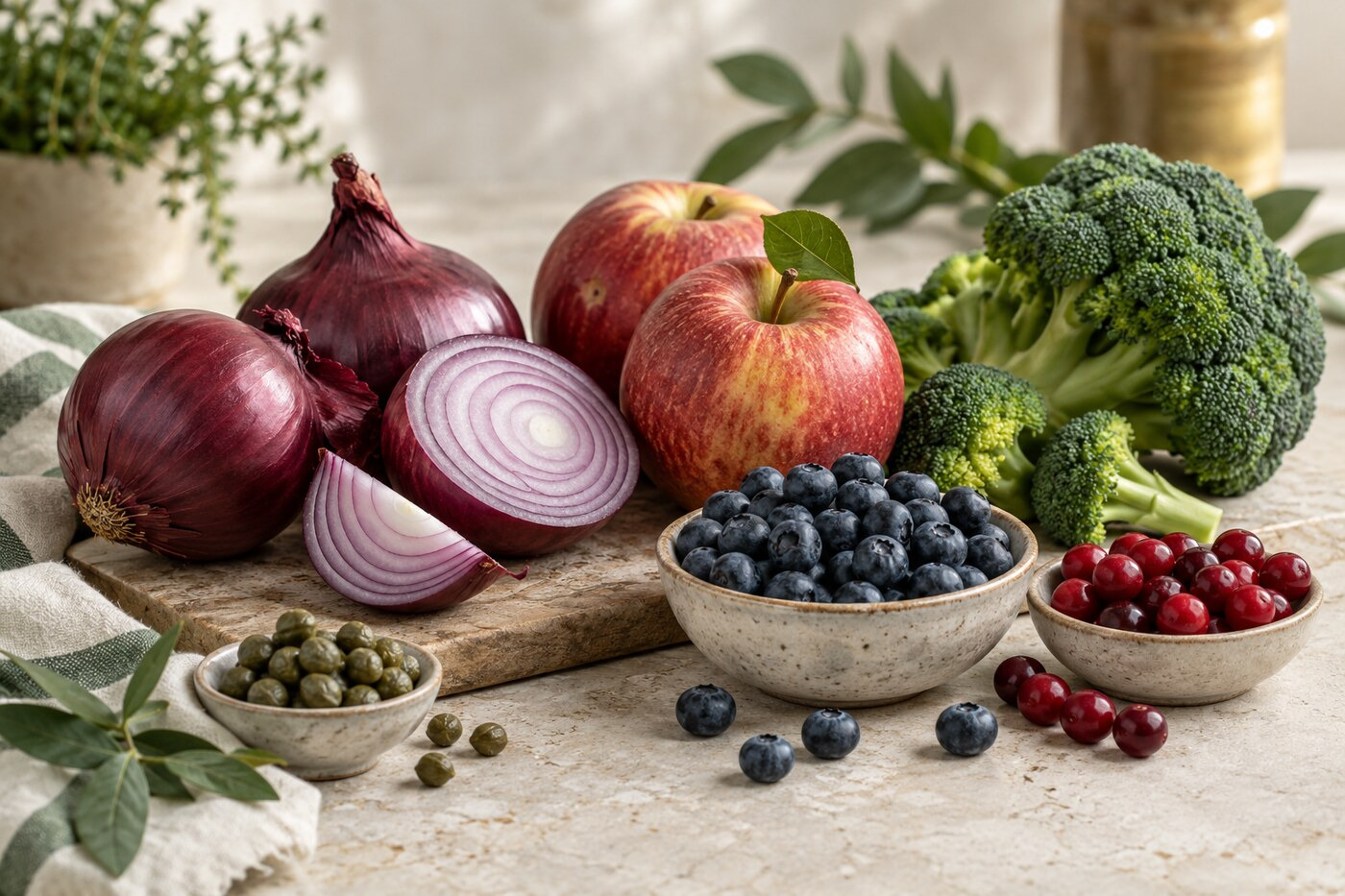
Where does quercetin come from in food?
Quercetin occurs naturally across a wide range of plant foods, and for most people, diet remains the primary source of exposure by a considerable margin.
Foods richest in quercetin include:
- Onions, particularly the outer rings and red varieties, which consistently rank among the highest natural sources.
- Capers, often overlooked but disproportionately concentrated in quercetin relative to serving size.
- Apples, especially when eaten with the skin, where much of the compound is concentrated.
- Berries, including blueberries and cranberries.
- Broccoli and kale, both reliable if more modest contributors.
- Tomatoes, which add smaller but still meaningful amounts to a typical diet.
Quercetin content varies substantially depending on the cultivar grown, how ripe the produce was at harvest, and how it was prepared. Boiling can leach out a portion of the quercetin content, while raw or lightly cooked preparation tends to preserve more of it. This variability is one reason nutrition databases give ranges rather than fixed figures for quercetin content in any given food.
There's also an important chemical distinction worth understanding. Dietary quercetin, as it occurs in onions, apples, berries, and other foods, is mostly bound to sugar molecules in what's called a glycosylated form. The body has to process these glycosides before absorbing the quercetin itself, and the efficiency of that conversion varies from food to food. In practical terms, this means a typical diet, even one rich in onions and apples, tends to deliver far lower total quercetin exposure than the doses tested in most supplement trials. If you want the kind of intake used in clinical research, food alone is unlikely to get you there.
Formulation has a major influence on quercetin absorption. Plain quercetin powder has low oral bioavailability, and the amount reaching the circulation varies. This is one reason results from different formulations should not be treated as interchangeable.
Several technological approaches exist specifically to address this absorption bottleneck:
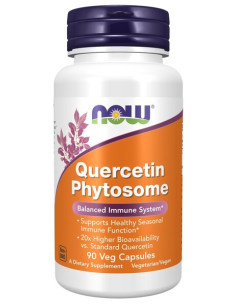
- Phytosome and phospholipid complexes, where quercetin molecules are bound to phospholipids similar to those in cell membranes, improving how efficiently the gut absorbs them.
- Liposomal delivery systems, which encapsulate quercetin inside microscopic lipid spheres that the digestive tract handles differently to a raw powder.
- Inclusion complexes, using compounds like cyclodextrins to physically shield and stabilise the quercetin molecule until absorption.
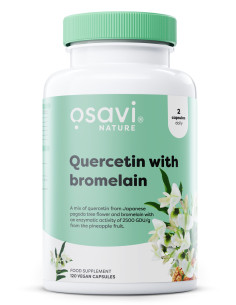
- Combination with bromelain, an enzyme derived from pineapple stems. The pairing is common in commercial products, but robust human evidence that bromelain improves quercetin absorption is lacking.
A human pharmacokinetic study reported substantially greater plasma exposure from a phytosome formulation than from unformulated quercetin. That is a measurable absorption result, but higher blood levels do not automatically establish a health benefit. Pharmacokinetic improvement and a confirmed clinical effect are different claims.
Bromelain appears frequently in commercial quercetin combinations. This shows that the pairing is popular, but it does not by itself demonstrate better absorption or a clinical advantage. When comparing combination products, check the amount of each ingredient rather than assuming that the pairing has been clinically validated.
When you're comparing products, a few label details are worth checking before you buy:
- Whether the product specifies its formulation type (phytosome, liposomal, standard powder) rather than just listing "quercetin" with no further detail.
- Whether bromelain or another digestive enzyme is included, and at what proportion relative to the quercetin content.
- Whether the label states the compound's source and extraction method with any specificity.
Pro Tip: Independent batch testing or a certificate of analysis can provide useful evidence about identity, purity and measured content. Check what was tested, which laboratory performed the analysis and whether the document refers to the same batch as the product.
Is quercetin safe? Side effects and drug interactions
Quercetin's safety profile in food is well established; it's a compound humans have consumed in onions, apples, and tea for generations without notable concern. Supplement-level intakes, which typically far exceed what a normal diet provides, warrant a more careful look.
In short clinical trials, reported adverse events have generally been mild, including occasional headache or gastrointestinal discomfort. Data on long-term use and use during pregnancy or breastfeeding remain limited. The LiverTox review reports that oral quercetin supplements have not been linked to clinically apparent liver injury. Concerns sometimes repeated online about kidney toxicity largely derive from high-dose intravenous exposure and should not be presented as evidence about ordinary oral supplement use.
Interactions are the more pressing practical concern for most people considering a quercetin supplement; for detailed advice on supplement safety during cancer therapy, consult resources like the patient guide on supplements to avoid during immunotherapy.
- Anticoagulant medications — laboratory and pharmacokinetic findings suggest a possible interaction, so anyone taking a blood thinner should ask a doctor or pharmacist before using concentrated quercetin.
- Medicines metabolised via CYP enzymes or transported by P-glycoprotein — quercetin affects these pathways in experimental systems, but the clinical relevance varies by medicine and is not always known.
- Other supplements taken concurrently — stacking multiple antioxidant or anti-inflammatory supplements increases the complexity of predicting how they interact.
This is precisely the kind of situation where speaking with a doctor or pharmacist before starting a new supplement isn't just cautious box-ticking, it's the only reliable way to check a specific medication list against a specific compound. Supplements are regulated differently from medicines across the EU too: they don't go through a pre-market approval process the way a new drug does, so monitoring for interactions and adverse events is largely left to the consumer and their healthcare provider.
EU Regulation 1924/2006 treats wording that states, suggests or implies a relationship between a food or ingredient and health as a health claim. Such claims may be used only when authorised and included in the EU list of permitted claims. EFSA examined quercetin directly in a 2011 scientific opinion. For protection of DNA, proteins and lipids from oxidative damage, the Panel concluded that a cause-and-effect relationship had not been established. Three other proposed descriptions — “cardiovascular system”, “mental state and performance”, and “liver, kidneys” — were considered too general and non-specific to qualify as specific health claims. The opinion therefore does not support advertising quercetin as protecting these organs or functions. It also did not assess the later allergy trial discussed above, so that study must be reported as research rather than converted into a product claim.
What can reasonably be concluded from the current evidence?
Strip away the marketing language and the picture is narrower than many product pages suggest. A small allergy-symptom trial and several cardiovascular studies provide results worth following, but they differ in formulation, population and outcome. They do not establish generally applicable health benefits for quercetin supplements.
Everything else, the anticancer research, the neuroprotective mechanisms, most of the metabolic and exercise-recovery claims, remains preclinical or built on trials too small and too short to generalise from confidently. That's not a dismissal. Early-stage research often looks exactly like this before it either firms up into something clinically established or quietly fails to replicate at scale.
What's missing across the board is standardisation. Trials use different quercetin formulations, different doses, different durations, and different populations, which makes it genuinely difficult to compare results directly or draw a single confident conclusion. Larger, longer, formulation-matched trials would answer far more than another round of small pilot studies. Until those exist, the honest position is cautious interest rather than confident endorsement.
How to choose a quercetin supplement without falling for marketing claims
Choosing between quercetin products gets easier once you know which label details actually signal quality, rather than just clever marketing.
- Check the formulation type. Look for a specific description, phytosome, liposomal, or another named delivery technology, rather than a plain "quercetin" listing with no further detail.
- Look for third-party testing. A published certificate of analysis from an independent lab confirms potency and purity claims rather than asking you to trust the label alone.
- Read the full ingredient list. Transparent labelling should disclose every component, including fillers, capsule material, and any co-ingredients like bromelain.
- Note whether bromelain is included. If you're specifically interested in the quercetin-bromelain combination, confirm the ratio and dose rather than assuming it's clinically meaningful by default.
- Confirm dietary suitability. Vegetarian or vegan capsule materials should be stated clearly if that matters to you.
- Check storage and usage instructions. Clear guidance on storage conditions suggests a manufacturer that takes stability and shelf life seriously.
- Assess seller support. A responsive, contactable seller with clear customer service channels is a practical sign of accountability.
Watch for these red flags: vague "proprietary blend" language that hides actual ingredient amounts, no batch number or manufacturer contact details, and health claims that go beyond what EU rules permit — particularly wording that implies prevention, treatment or a guaranteed outcome.
Pro Tip: Favour vendors that make their certificates of analysis freely available and respond promptly to product questions. That combination tells you far more about product quality than any claim printed on the front of the packaging.
An editorial note on separating hype from evidence
Working through the quercetin research, what strikes me most is how much of the compound's popular reputation rests on borrowed credibility from its lab results. Antioxidant activity in a petri dish is real and well documented, but it's become a kind of shorthand that gets stretched to cover claims the human trials simply haven't made yet. That gap between mechanistic promise and clinical proof is where I think most readers get misled, not by dishonest marketing necessarily, but by an understandable tendency to round "promising in cells" up to "proven in people."
The allergy trial is interesting precisely because it is specific: a defined formulation, dose, population and set of outcomes. That makes it more informative than a collection of unrelated laboratory papers, but not conclusive. At Vita-Store, the practical priority is formulation transparency rather than broad promises. Food remains the ordinary dietary source of quercetin, and anyone taking medication should discuss concentrated supplements with a doctor or pharmacist.
— Lexa
If the formulation differences covered in this article left you wondering where to actually look, a reliable retailer's product page should state formulation type, sourcing, and brand clearly, so you're not left guessing whether you're buying a bioavailable phytosome complex or plain quercetin powder dressed up in similar packaging.
The Vita-Store range includes different quercetin formats and combination products. Compare the formulation, amount per serving, complete ingredient list and allergen information rather than assuming that one delivery system has a proven clinical advantage. Follow the product label, and speak with a doctor or pharmacist if you take medication or have an existing health condition. Browse the quercetin category to compare the available products.
This article is general information, not a substitute for advice from a qualified doctor. Consult a qualified healthcare professional about your own circumstances before acting on anything here.
Sources