Vitamin D labels look simple until you compare two bottles. One uses micrograms, another uses IU, and a third provides far more than the daily reference intake. Add different national recommendations and it is easy to wonder whether 10, 15, 25 or even 75 micrograms is the “right” amount.
The short answer is that there is no single dose for every person. For healthy adults, EFSA sets an adequate intake of 15 micrograms (600 IU) a day when skin production from sunlight is minimal. This is a reference value, not a treatment dose. The safe upper level for adults is 100 micrograms (4,000 IU) a day from all sources combined, but that is a ceiling rather than a goal.
This guide explains what those figures mean, how to read a label, and when a standard supplement is no longer a do-it-yourself decision.
Key takeaways
- EFSA’s adequate intake for adults is 15 µg (600 IU) a day when vitamin D production in the skin is minimal.
- The adult upper intake level is 100 µg (4,000 IU) a day from all sources, but it is a safety ceiling, not a target.
- Check the serving size and add together vitamin D from every supplement you use.
- National product limits can be lower than EFSA’s scientific upper level; in the Netherlands, the adult product maximum is 75 µg per recommended daily portion.
- Higher-dose treatment and supplementation alongside certain medicines should be discussed with a doctor or pharmacist.
Table of Contents
The numbers at a glance
| Figure |
What it means |
| 1 microgram (µg) |
Equals 40 international units (IU) of vitamin D |
| 15 µg / 600 IU |
EFSA’s adequate intake for adults and children from age 1, assuming minimal vitamin D production in the skin |
| 10 µg / 400 IU |
EFSA’s adequate intake for infants aged 7–11 months; also a common national recommendation for several groups |
| 100 µg / 4,000 IU |
EFSA’s tolerable upper intake level for adults, including pregnancy and breastfeeding, and adolescents aged 11–17 |
“Adequate intake” and “upper intake level” answer two different questions. The first is an estimate of an intake considered sufficient for a healthy population. The second is the highest long-term daily intake that is not expected to pose a risk for most people. The large gap between them is not an invitation to aim for the maximum.
Why do vitamin D recommendations vary?
Vitamin D is unusual because food is only one source. Your skin can produce it when exposed to UVB light, and that contribution changes with the season, latitude, time outdoors, clothing, skin pigmentation and age. EFSA therefore based its dietary figures on conditions of minimal skin production.
EFSA’s 2016 review set an adequate intake of 15 µg a day for adults and children aged 1–17, including older adults. For infants aged 7–11 months, the figure is 10 µg. Pregnancy and breastfeeding do not increase EFSA’s adult reference value.
National public-health advice can still differ. The Netherlands and the UK, for example, issue recommendations for particular age groups and people with limited sun exposure. These are not necessarily contradictions: they may use different assumptions and are designed for their own populations. If your national health authority gives advice for your age or circumstances, use that as your everyday starting point.
How much is too much?
EFSA’s current tolerable upper intake levels are:
- 25 µg (1,000 IU) a day for infants up to 6 months
- 35 µg (1,400 IU) a day for infants aged 6–12 months
- 50 µg (2,000 IU) a day for children aged 1–10
- 100 µg (4,000 IU) a day from age 11, including adults, pregnancy and breastfeeding
These limits cover habitual intake from food, fortified foods and supplements combined. They do not apply to a short course prescribed and monitored by a clinician to correct a diagnosed deficiency.
Vitamin D is fat-soluble, so excessive amounts can accumulate. The main concern is an abnormally high calcium level. Possible symptoms include nausea, vomiting, weakness, excessive thirst and frequent urination; prolonged excess may contribute to kidney problems. Toxicity is usually associated with taking too much vitamin D from supplements over time, not with ordinary sun exposure.
A practical rule: count every source. A vitamin D capsule, a multivitamin, cod liver oil and a fortified product can all contribute to the same daily total.
A note on Dutch and national product limits
EFSA’s upper intake level is a scientific safety reference. It is not the same as the maximum amount that may be placed in a food supplement under national law.
In the Netherlands, the maximum vitamin D amount in the recommended daily portion of a supplement is 75 µg. Products providing more than 15 µg must carry an age-related warning for infants, while products providing more than 20 µg must state that they are not suitable for children up to and including 10 years of age. Dutch guidance also uses lower product maxima for children: 15 µg for children under 1 and 20 µg for ages 1–10.
Rules and public-health recommendations are not identical across Europe. For cross-border shopping, read the product’s stated daily serving and age warning rather than assuming that the adult EFSA ceiling is the permitted dose on every label.
How to read a vitamin D label
Start with the serving size, not the largest number on the front of the pack. The amount may be listed per drop, capsule or two-capsule serving. Then convert the units if necessary:
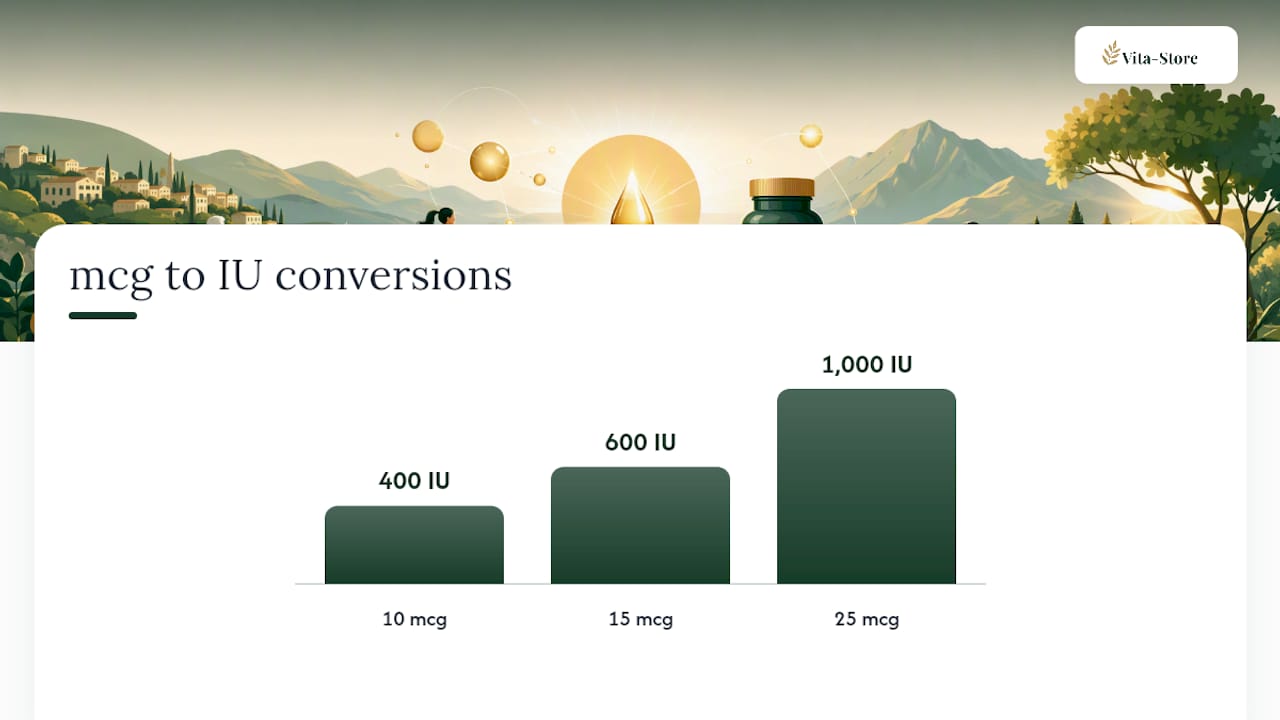
- 10 µg = 400 IU
- 15 µg = 600 IU
- 25 µg = 1,000 IU
- 50 µg = 2,000 IU
- 75 µg = 3,000 IU
- 100 µg = 4,000 IU
The percentage reference intake (% RI or % NRV) is a labelling tool. A high percentage does not automatically mean that a product is unsafe, and it does not mean everyone needs that amount. The actual dose in µg or IU is more useful when comparing products.
You will usually see vitamin D3 (cholecalciferol) or D2 (ergocalciferol). D3 may come from lanolin or a vegan source such as lichen, so check the ingredient list if origin matters to you.
Who should pay extra attention?
Some people are more likely to have low vitamin D status because they produce less in the skin, absorb less from the intestine or spend little time in strong sunlight. This includes people who:
- spend most of the day indoors or cover most of their skin outdoors;
- have darker skin pigmentation;
- are older and have limited outdoor exposure;
- have a condition that affects fat absorption, such as coeliac disease or Crohn’s disease;
- take medicines that affect vitamin D metabolism or fat absorption;
- have significant obesity or have undergone bariatric surgery.
Belonging to one of these groups does not tell you the dose you personally need. It is a reason to check the guidance for your country and discuss supplementation with a doctor or pharmacist, especially when several factors apply at once.
Do you need a vitamin D blood test?
The usual test measures serum 25-hydroxyvitamin D, written as 25(OH)D. Routine testing is not generally recommended for every healthy adult. It is more useful when a clinician suspects deficiency, when a condition affects absorption or calcium metabolism, or when someone is being monitored during higher-dose treatment.
A result also needs interpretation in context. Laboratories and clinical guidelines do not always use exactly the same cut-offs, so choosing a high supplement dose from a number alone can be misleading.

Medicines, calcium and other precautions
Vitamin D increases calcium absorption. If you take a high-dose vitamin D product together with calcium, the combined intake deserves extra attention. Kidney disease, a history of kidney stones, high blood calcium and certain parathyroid conditions also call for professional advice before supplementation.
Some medicines can alter vitamin D absorption or metabolism, including certain corticosteroids, anti-seizure medicines and medicines that reduce fat absorption. Thiazide diuretics and digoxin may require particular care because of their relationship with calcium and heart rhythm. A pharmacist can check your exact medicine list.
Vitamin K is often sold together with vitamin D, but that combination is not suitable for everyone. People taking vitamin K antagonists such as warfarin should consult their healthcare professional before using a D-and-K product.
Choosing a product without overcomplicating it
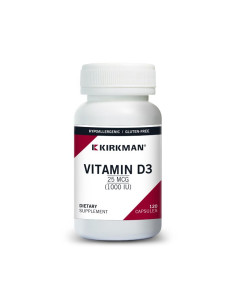
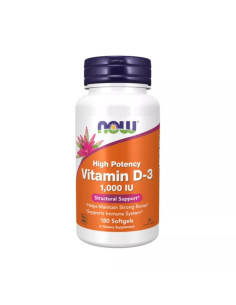
For everyday use, the most useful label is a clear one. Look for the amount per daily serving, the form of vitamin D, age warnings and straightforward instructions. Drops can make small adjustments easier, while capsules and softgels give a fixed dose. Neither format is automatically better.
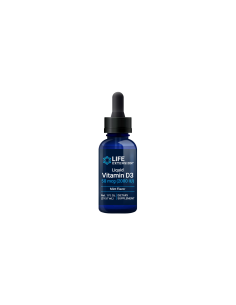
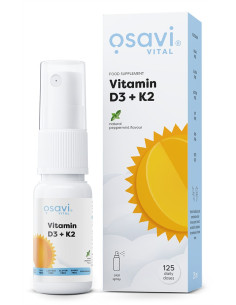
Vita-Store’s range includes different strengths and formats. Life Extension Liquid Vitamin D3 can be dosed drop by drop, while Osavi Vitamin D3 + K2 Oral Spray offers an alternative to capsules. With products that contain vitamin K, pay particular attention to label warnings and possible medicine interactions.
The products recommended below cover several brands, strengths and formats. Always follow the manufacturer’s recommended daily dose and do not combine several vitamin D products without checking the total.
The practical takeaway
For most healthy adults, EFSA’s 15 µg (600 IU) adequate intake is the clearest European reference point when skin production is minimal. It should not be confused with the 100 µg adult upper limit, and neither number replaces national advice or an individual treatment plan.
Read the serving size, convert µg and IU correctly, add up vitamin D from every supplement you use, and ask a healthcare professional before choosing a high dose. That is usually all the complexity an everyday decision needs.
Sources
This article provides general information and is not a substitute for personal medical advice. Food supplements should not replace a varied, balanced diet and a healthy lifestyle. Speak to a qualified healthcare professional about your individual circumstances.
Recommended products