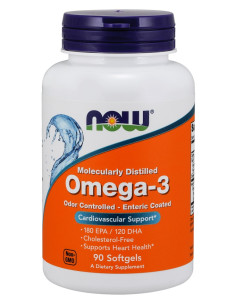
Omega-3 fatty acids are often discussed in relation to joint comfort, but the evidence is not the same for every joint condition. Research has mainly examined EPA and DHA in rheumatoid arthritis and osteoarthritis. Results are more consistent for rheumatoid arthritis, while findings in osteoarthritis remain mixed.
Important: no EU-authorised health claim states that omega-3 supplements treat arthritis or relieve joint pain. Supplements must not replace diagnosis, prescribed medication, physiotherapy or other medical care.
What has research examined?
Trials and systematic reviews have investigated self-reported pain, morning stiffness, physical function and use of anti-inflammatory medicines. Some rheumatoid arthritis studies observed small improvements in selected outcomes after several months. However, doses, products, study duration and outcome measures differ considerably.
For osteoarthritis, results are less consistent. Some studies report changes in pain or function, while others find no meaningful difference from placebo. Omega-3 fatty acids have not been shown to rebuild cartilage or reverse structural joint damage.
| Question |
Balanced interpretation |
| Rheumatoid arthritis |
Some research reports modest changes in selected symptoms; omega-3 remains an adjunct. |
| Osteoarthritis |
Evidence is mixed and does not establish cartilage repair. |
| Which omega-3? |
Most joint studies examine EPA and DHA rather than plant-derived ALA. |
EPA, DHA and ALA
EPA and DHA occur in oily fish and in fish-oil or algal-oil supplements. ALA is found in flaxseed, chia and walnuts. Conversion of ALA to EPA and DHA is limited and variable. The EPA and DHA declared per daily serving is therefore more useful than the total fish-oil amount on the front label.

How to read an omega-3 label
- Check EPA and DHA separately per recommended daily serving.
- Do not assume 1,000 mg fish oil equals 1,000 mg EPA plus DHA.
- Check allergens, capsule ingredients, batch details and expiry date.
- Follow the stated serving and storage instructions.
- Choose algal oil when a fish-free source is preferred.
Food first
Salmon, sardines, mackerel and herring supply EPA and DHA. Walnuts, flaxseed and chia contribute ALA. A varied diet remains the foundation; supplements complement rather than replace it.

EU-authorised claims
EU rules permit specific claims when conditions of use are met. EPA and DHA contribute to the normal function of the heart; the beneficial effect is obtained with a daily intake of 250 mg EPA and DHA. This claim does not concern joints and is not proof that a supplement treats arthritis.
Safety
Omega-3 supplements may cause digestive discomfort or a fishy aftertaste. Consult a doctor or pharmacist before use if you take anticoagulant or antiplatelet medication, have a bleeding disorder or upcoming operation, are pregnant or breastfeeding, or receive medical treatment. Never change prescribed arthritis medication without professional advice.
EFSA concluded that combined supplemental intakes of EPA and DHA up to 5 g daily do not raise safety concerns for adults in the general population. This is a safety assessment, not a recommended dose.
Frequently asked questions
Can omega-3 cure arthritis?
No. It does not cure rheumatoid arthritis or osteoarthritis and must not replace medical care.
Is fish oil the same as EPA and DHA?
No. Fish oil contains several fats. Compare the declared EPA and DHA per serving.
Can I combine it with arthritis medication?
Ask your doctor or pharmacist, particularly with anticoagulant, antiplatelet or anti-inflammatory medicines.
Sources
General information only; not a substitute for advice from a doctor, pharmacist or dietitian. Reviewed for lower regulatory risk under EU health-claim and Dutch NVWA principles; this is not a legal guarantee.