Berberine is often presented as a natural shortcut for blood sugar or weight control. The research is more interesting—and less tidy. Trials report changes in several metabolic markers, but study quality varies, weight effects are usually modest, and the safety discussion has become more cautious.
Key takeaways
Human studies mainly examine blood glucose, HbA1c, blood lipids and body measurements; they do not establish that a supplement treats diabetes or cardiovascular disease.
Reviews often report lower fasting glucose, LDL cholesterol and triglycerides, but confidence is limited by short trials, small samples and uneven methods.
Weight changes are generally small rather than dramatic.
Berberine can affect medicines and is not suitable for self-treatment alongside glucose-lowering therapy.
In 2026 EFSA released a draft safety opinion and could not establish a safe intake level. The draft is not a ban or a final Commission decision, but it is an important caution.
Berberine is an alkaloid found in plants including barberry, goldenseal and several Coptis species. Laboratory work links it to AMPK signalling, glucose production in the liver, lipid metabolism and the gut microbiota. Those mechanisms help frame research questions, but they are not proof of a useful effect in people.
Another practical detail is easy to miss: most trials use a standardised berberine preparation, not an ordinary herbal tea or a loosely specified whole-plant extract. Results from one formulation cannot automatically be transferred to every product that contains a berberine-rich plant.
What human studies actually measured
A 2025 overview brought together 54 systematic reviews covering numerous outcomes. Positive signals appeared most often in glucose and lipid measurements, but the authors also judged much of the underlying evidence low or very low quality. Counting positive outcomes is therefore less informative than asking how large the changes were and how reliable the trials were.
For glucose control, meta-analyses often report changes in fasting glucose and HbA1c, particularly in people with type 2 diabetes. For lipids, LDL cholesterol and triglycerides are the most consistent signals; HDL findings vary. These are surrogate markers, not proof that berberine prevents heart attacks or diabetes complications.
Clinical studies usually test measured preparations and metabolic markers, not broad wellness promises.
Weight-loss claims deserve extra restraint. Reviews may find small changes in weight, BMI or waist circumference, but not the dramatic effect sometimes implied online. Liver and digestive outcomes are also being studied, although diagnoses such as fatty liver disease belong in medical care, not self-directed supplementation.
The infographic summarises common trial measurements. It does not show guaranteed benefits or authorised health claims.
Why the evidence is less certain than headlines suggest
The main weakness is not a lack of papers. It is the quality and comparability of the studies. Many trials are small, short and concentrated in a limited number of countries. Preparations and doses differ, as do background treatments and participant characteristics. Reviews can pool these studies, but pooling does not remove their limitations.
That is why phrases such as “works like a drug” or “natural Ozempic” are misleading. They compress laboratory mechanisms, changes in biomarkers and clinical treatment into one claim. These are different questions, and the available trials do not make berberine a substitute for prescribed care.
Side effects and interactions
Digestive complaints—including nausea, cramping, diarrhoea and constipation—are the effects most often reported in trials. More importantly, berberine can influence drug transporters and enzymes and may add to the effect of glucose-lowering medicines. Cyclosporine is a well-documented interaction concern; other prescription medicines may also require review.
Do not use berberine during pregnancy or breastfeeding, or give it to infants. If you use medicines for diabetes, blood pressure, clotting or immune suppression, or have liver disease, discuss the exact product and daily amount with a doctor or pharmacist before taking it.
What the current regulatory review means
In January 2026 EFSA endorsed a draft opinion on the safety of berberine-containing plant preparations for public consultation. The panel said that available data did not allow it to establish a safe intake level and highlighted unresolved questions including in-vitro genotoxicity signals, liver injury reports and major data gaps. This was a draft scientific assessment, not a final ban; risk-management decisions belong to the European Commission and Member States.
There is also no authorised berberine-specific health claim that allows a retailer to promise treatment of high blood sugar, high cholesterol, fatty liver disease or obesity. Some botanical claims remain under consideration, but that is not the same as authorisation. Dutch supervision follows the same basic distinction: research may be discussed carefully, while product advertising may not promise prevention or treatment of disease.
How to compare products
Identify the preparation: look for the plant source, extract and amount per daily serving.
Read the entire formula: combination products can add their own interactions and cautions.
Check the warnings: pregnancy, breastfeeding and medication advice should be easy to find.
Ignore dramatic comparisons: “pharmaceutical strength” and disease-treatment language are warning signs, not quality markers.
Review the dose with a professional: EFSA has not established a safe daily intake, so a popular online dose should not be treated as an official limit.
A realistic perspective
Berberine is scientifically interesting because human trials repeatedly find changes in some metabolic markers. The same literature also leaves important questions about study quality, clinical relevance, interactions and long-term safety. That combination calls for curiosity without turning a supplement into a treatment.
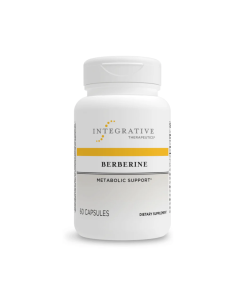
Vita-Store product pages show the stated preparation, amount and manufacturer warnings so formulations can be compared. The related products below are presented for comparison, not as a recommendation to treat a medical condition.
— Lexa
This article provides general information and is not a substitute for individual medical advice.
Blood sugar metabolism and insulin metabolism
Metabolic function
Cardiovascular function and lipid metabolism
Insulin receptor expression, with direct impact on supporting healthy glucose metabolism
Regulation of glycation
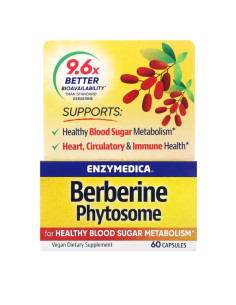
Food supplement with Berberine Phytosome (Berbevis), from Berberis aristata root.
Enzymedica Berberine Phytosome provides 275 mg of berberine per capsule, using enhanced-absorption Phytosome technology.
Food supplement with berberine extract.
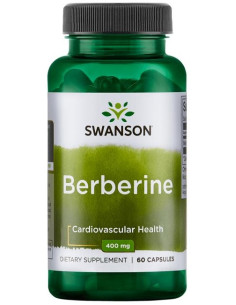
Swanson Premium Berberine delivers 400 mg berberine HCl per vegan capsule in a simple, plant-based formula intended for flexible daily use.
You need to login or create account
Save products on your wishlist to buy them later or share with your friends.