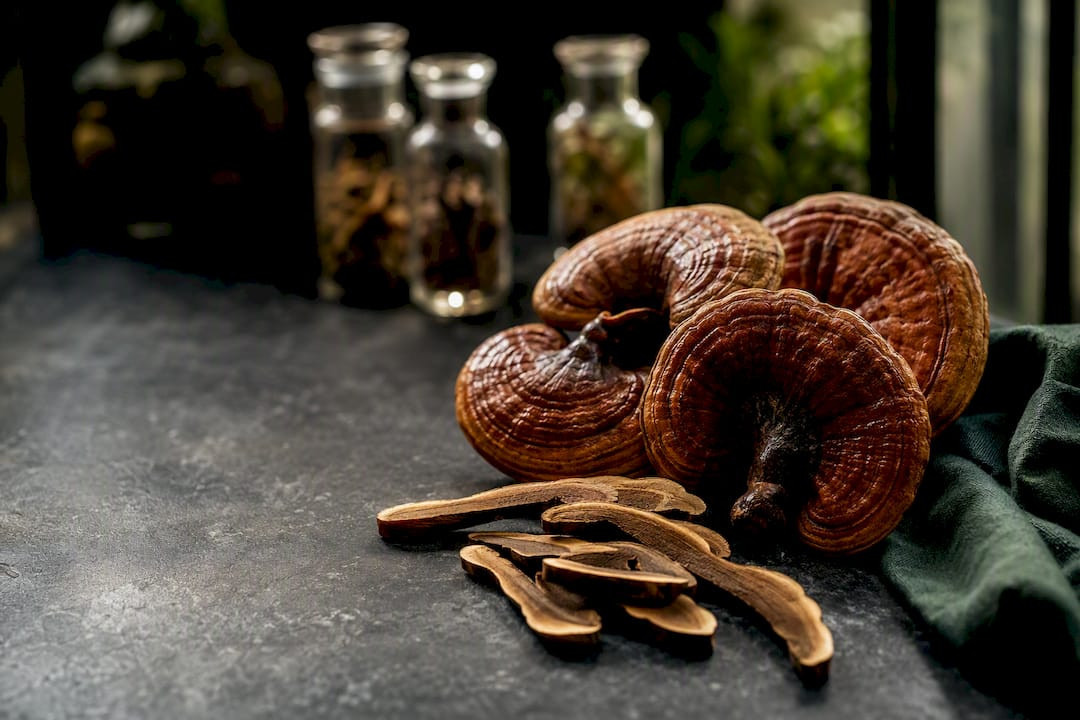
Reishi (Ganoderma lucidum) contains bioactive polysaccharides and triterpenoids, and human evidence for its effects on immune function, sleep quality, and antioxidant status remains limited but genuinely promising in specific areas. Most striking results still come from laboratory and animal models rather than people. The sections below unpack what the trials measured, where reishi shows real signal, and where the safety caveats matter most.
TL;DR:
Human evidence is limited and heterogeneous. A recent cross-sectional survey reported self-perceived improvements in fatigue, mood and appetite, but its design cannot establish that reishi caused those changes.
Reishi’s immune and antioxidant effects are supported by plausible mechanisms and preclinical studies, but actual benefits in humans remain unconfirmed due to limited research.
Variability in extract types, fungal parts used, and preparation methods complicates product comparisons and affects potential biological outcomes. In the EU specifically, mycelium-based reishi products sit in a different regulatory category (novel food rules) than fruiting-body extracts — worth knowing before you compare two “reishi” products on price alone.
Safety concerns include rare liver strain reports, interactions with blood thinners and immunosuppressants, and caution is advised for pregnant, breastfeeding, or surgery-bound individuals.
Reliable sourcing requires checking product labels for extract ratios, active compound percentages, third-party testing, and clear fungal part identification.
Key takeaways on reishi mushroom benefits
Reishi’s reputation rests on two compound families and a patchy but improving research base. Before the detail, here’s what to hold onto:
Most promising findings in people: small trials and a cross-sectional survey of cancer patients point to improvements in fatigue and mood, though the design cannot prove cause and effect.
Main bioactives: polysaccharides (particularly β-glucans) and triterpenoids, each linked to different biological effects.
Biggest evidence gap: most anti-cancer, cholesterol and blood sugar findings come from animal or in vitro work, not controlled human trials.
Main safety flag: rare reports of liver strain with prolonged use of powdered reishi, plus interaction risks with blood thinners and immunosuppressants.
Practical next step: check product labels for extract standardisation and speak with a healthcare professional before combining reishi with any medication.
Immune-related and antioxidant findings: what the studies show
Researchers usually describe the proposed mechanism as immune modulation rather than simple “stimulation”. That distinction matters, but it should not be mistaken for a demonstrated benefit: most findings concern laboratory markers, and they do not establish a clinically meaningful effect in people.
The Merck Manual likewise describes polysaccharides and triterpenoids as the constituents most often investigated, while stressing that evidence in humans remains limited and often rests on small or lower-quality studies.
Most of what we know about reishi’s immune and antioxidant activity comes from cell cultures and rodent studies. These models are useful for generating hypotheses. A compound that reduces oxidative stress markers in a mouse liver does not automatically produce the same effect in a person taking a capsule with breakfast. Human trials that do exist tend to involve small cohorts, often several dozen participants, and outcomes vary depending on which reishi preparation was tested.
Some human research has reported changes in markers linked to immune cell activity after regular reishi intake, alongside antioxidant activity that appears consistent with the triterpenoid content of the extract used. But “consistent with” is not the same as “proven to cause”. Reviewers studying Ganoderma lucidum have repeatedly called for larger, standardised human trials before firmer claims can be made about immune or antioxidant benefits.
Reishi should not be treated as interchangeable with unrelated antioxidant ingredients. Different products have different compositions, research histories and label considerations.
The honest summary: reishi’s immune and antioxidant story is biologically plausible and backed by a genuine mechanism, but the human data trails a long way behind the laboratory data. That gap is the theme running through almost every claim made about this mushroom.
Does reishi actually help with sleep, stress and fatigue?
This is where reishi has the most human-relevant, if still modest, evidence. A 2024 cross-sectional survey of people with cancer using reishi reported self-reported improvements in fatigue, mood, and appetite. Nausea scores also improved for some respondents. The catch is right there in the study design: it was observational and relied on self-report, so it cannot separate a genuine drug effect from expectation, other treatments, or simply feeling better over time.
Animal research offers a cleaner but narrower window. A 2024 formulation study using mouse models, including weight-bearing swim tests and sleep-latency measurements, found that specific Ganoderma preparations reduced exhaustion time and improved sleep duration, but the effect size and direction varied by formulation. One recipe outperformed another using the same base mushroom simply because the extraction process changed which compounds ended up in the final product.
The proposed mechanisms sit at the intersection of two systems. Some researchers point to possible GABAergic activity, the same neurotransmitter pathway targeted by several conventional sleep aids, as a plausible route for reishi’s sedative-like effects in animal studies. Others focus on cytokine modulation, the idea that calming certain inflammatory signals might indirectly ease fatigue and improve rest quality. Neither mechanism has been confirmed in well-controlled human trials, and the honest position is that both remain working theories rather than settled science.
Who actually saw benefits in the available human data? Mostly people already dealing with a health burden, specifically cancer patients reporting on fatigue during or after treatment. That is a meaningfully different population from a generally healthy adult hoping for slightly better sleep after a stressful week. Results in a fatigued clinical population do not automatically generalise to someone without an underlying condition, and the evidence cited here does not test that comparison directly.
If sleep support is the main goal, reishi is one option among several researched botanicals. The evidence is not strong enough to assume that any single mushroom or herb is the answer, and formulation choice can matter as much as the headline ingredient.
What do studies say about reishi and cholesterol or blood sugar?
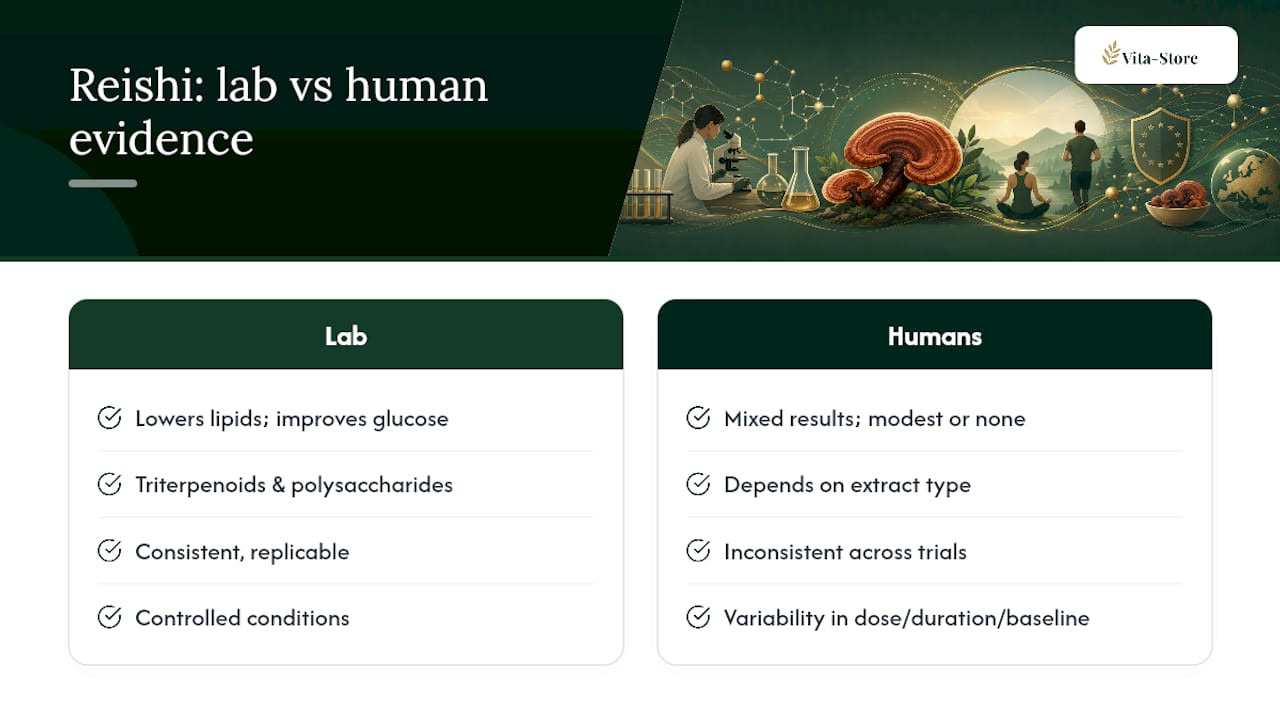
Animal and in vitro research has repeatedly shown reishi extracts influencing lipid and glucose markers in rodent models, sometimes lowering total cholesterol or improving glucose tolerance under controlled feeding conditions. The mechanisms proposed involve triterpenoid activity on lipid metabolism pathways and polysaccharide effects on insulin signalling. These are consistent, replicable findings, but they are almost entirely confined to animals and cell cultures.
Human trials tell a messier story. Some smaller studies have reported modest improvements in lipid markers among participants taking reishi extracts over several weeks. Others have found no significant change compared with placebo. This inconsistency is not necessarily a sign that the animal data was wrong. It more likely reflects real differences in study design: dose, extract type, trial duration, and baseline health of participants all varied considerably between trials.
Extract variability is probably the single biggest reason human cholesterol and blood sugar results diverge so much. A hot-water extract concentrates polysaccharides. An alcohol-based extract pulls more triterpenoids into the final product. A trial using powdered whole fruiting body delivers yet another compound ratio again. When three studies test three different preparations and call them all “reishi”, direct comparison becomes difficult, and pooling the results into a single verdict risks masking real differences between products.
None of the currently available human evidence supports describing reishi as a treatment for high cholesterol or blood sugar problems. It should be treated as its own product category rather than assuming that findings for unrelated supplements apply to it.
The honest takeaway for this category is that the laboratory signal is real and repeatable, but it has not yet translated into a consistent, replicable human effect. Anyone hoping reishi will meaningfully shift a lipid panel or fasting glucose reading should treat that expectation as unproven rather than likely.
Overview of research on reishi, cholesterol and blood sugar
Anti-cancer claims and the limits of clinical evidence
Laboratory studies have identified mechanisms by which reishi compounds interact with cancer cell lines, including triggering apoptosis (programmed cell death) in cultured cells and modulating immune cell activity in animal tumour models. These findings are genuinely interesting from a pharmacology standpoint, and they explain why reishi has attracted so much research interest over the decades.
They do not, however, constitute evidence that reishi treats or prevents cancer in humans. Clinical reviews and cancer centres have repeatedly urged caution around this exact gap between laboratory mechanism and clinical outcome. The Merck Manual’s overview of reishi notes that high-quality human studies are often lacking or inconclusive, and that many claims rely on animal or in vitro findings rather than controlled trials in patients.
The quality-of-life data is a separate and more modest story, and it deserves to be treated that way. The survey of cancer patients using reishi found self-reported improvements in fatigue, appetite, and mood, alongside some adverse effects in a minority of respondents. Survey data like this can generate useful hypotheses about symptom management during illness. It cannot establish that reishi altered disease progression, tumour size, or survival, because the study was never designed to measure those outcomes.
Reishi is not an authorised cancer treatment in the EU, and food supplements may not claim to prevent, treat or cure cancer. The regulatory position on botanical health claims needs a little more nuance. The European Commission and Member States have not finalised their consideration of a large group of botanical claims, so those pending claims do not appear as authorised claims in the EU Register. This does not turn them into authorised claims, and it does not create an exception for disease-treatment or disease-prevention language. Some pending botanical claims may remain usable under transitional rules if all applicable EU and national conditions are met, but that is a separate question from whether EFSA has positively assessed a claim. The Court of Justice addressed this distinction in its 2025 Novel Nutriology judgment. Conflating a laboratory apoptosis finding with a therapeutic claim remains one of the most common ways reishi’s evidence gets overstated online. Anyone managing a cancer diagnosis should discuss all supplement use, including reishi, with their treating clinician before starting, given the interaction risks covered in the safety section below.
What the research actually shows about reishi’s evidence quality
Most reishi research still lives in test tubes and rodent cages, not clinical trial registries. The ratio matters: for every well-designed human RCT on reishi, there are considerably more in vitro and animal studies exploring the same compounds. That is not unusual for a botanical with this long a history, but it does mean the evidence pyramid is heavily weighted towards the preclinical base.
Sample sizes in the human trials that do exist tend to be small, often a few dozen participants, which limits statistical power and makes it harder to detect modest effects reliably. Heterogeneity compounds the problem. Studies differ in which part of the fungus was used (fruiting body, mycelium, or spores), which extraction method was applied, and what dose was tested. A formulation study on Ganoderma preparations demonstrated this directly, finding that different recipes using the same base mushroom produced measurably different anti-fatigue and sleep outcomes in mice.
The most useful human data currently available comes from two sources: small randomised controlled trials measuring specific markers over weeks, and cross-sectional surveys capturing self-reported experience from existing users. Both have value, read correctly. RCTs offer more control but smaller numbers. Surveys capture real-world experience across more people but cannot separate reishi’s effect from everything else happening in a participant’s life. Experts researching Ganoderma lucidum have consistently called for larger, standardised trials that use a single, well-characterised extract, which would make future results far easier to compare and trust.
Reishi mushroom uses: forms, extracts and how to judge quality
Reishi supplements come in several distinct forms, and the differences are not cosmetic. Fruit body extracts typically capture the full compound profile of the mature mushroom. Mycelium products, grown on grain substrate, often contain lower triterpenoid concentrations and more residual starch unless properly processed. Spore powder is a niche category with its own compound profile. Hot-water extraction concentrates polysaccharides, including β-glucans, while alcohol extraction pulls more triterpenoids into the final product, a distinction confirmed by formulation research showing that preparation method changes measurable biological outcomes.
None of this means one form is universally “better”. It means the form determines which compounds you are actually getting, and that should match what a person is hoping to explore.
There’s a regulatory wrinkle here too, and it’s easy to miss because it looks like a compositional detail rather than a legal one. Published EU novel-food consultations classify extract powder from the reishi fruiting body as not novel, while dehydrated Ganoderma lucidum mycelium powder was classified as novel because a significant history of consumption in the EU before 15 May 1997 was not demonstrated. The conclusions apply to the specifically described materials and production methods; they should not be generalised automatically to every fruiting-body extract, fermented material or mycelium product. A novel food requires authorisation before it may be placed on the EU market. The European Commission’s novel-food consultation table lists both reishi decisions. If a label does not identify the fungal part and preparation clearly, ask the retailer or manufacturer rather than assuming the distinction does not matter.
A short quality checklist helps cut through marketing noise:
Look for a stated extract ratio (e.g. 10:1) rather than a vague “potent extract” claim.
Check for a certificate of analysis (CoA) confirming polysaccharide and triterpenoid content.
Favour brands that disclose third-party testing for heavy metals and contaminants.
Confirm the fungal part used (fruit body, mycelium, or spores) is stated clearly on the label.
Check the country of origin and cultivation method where listed.
Pro Tip:Search the product label for a numeric β-glucan percentage rather than a generic “immune support” claim. A specific figure, backed by a CoA, tells you far more about what’s actually in the capsule than marketing language ever will.
Red flags are worth naming directly. “Proprietary blend” with no ratio disclosed. Potency claims with no testing standard behind them. Labels that never specify which part of the mushroom was used. Any of these should prompt more questions before purchase, not fewer.
Reishi side effects and who should be cautious
Most people tolerate reishi without incident, but the safety picture is not entirely clean. Reported adverse effects include mild digestive upset, dry mouth, dizziness, and occasional skin reactions. More concerning, though rarer, are reports of liver strain associated with prolonged use of powdered reishi in some case series, a signal that the Merck Manual flags explicitly as part of its safety overview.
Interaction risk is the area deserving the most attention. Reishi has documented or hypothesised interactions with anticoagulants and antiplatelet medications, which raises bleeding risk when combined. It has also been flagged for potential interaction with immunosuppressant drugs, given the mushroom’s studied effects on immune cell activity, and with certain chemotherapy agents. None of this constitutes clinical dosing guidance. It is a reason to have a specific conversation with a prescribing clinician before combining reishi with any of these medication classes.
Several groups warrant particular caution:
People taking blood thinners or antiplatelet medication, due to bleeding interaction risk.
People on immunosuppressant therapy, given reishi’s studied immune-modulating activity.
Anyone scheduled for surgery, since bleeding risk can complicate procedures, and supplements are often advised to be paused beforehand.
People with existing bleeding disorders.
Pregnant or breastfeeding people, for whom safety data is essentially absent.
Consumer health reviews, including a summary from Medical News Today, consistently echo the same message: human safety data remains limited, and caution is warranted precisely because the evidence base has not caught up with the mushroom’s popularity.
How to include reishi in a wellness routine responsibly
Trying reishi sensibly comes down to a few practical habits, not a strict protocol. A short, methodical approach protects against most avoidable problems:
Read the label fully before buying, checking extract type, fungal part used, and any stated ratio, and follow the manufacturer’s guidance on use rather than an online forum’s suggestion.
Speak with a healthcare professional first if you take any prescription medication, particularly blood thinners, immunosuppressants, or chemotherapy drugs.
Introduce one new product at a time. Adding reishi alongside three other new supplements makes it impossible to identify what caused any reaction.
Keep a simple log noting date, product, and any changes noticed, whether positive or negative. This creates a useful record to bring to a clinician if questions arise.
Stop use and seek medical advice if you notice unusual symptoms such as jaundice, unexplained bruising, or persistent digestive upset.
This is a framework for informed decision-making, not a substitute for professional guidance tailored to individual health circumstances.
An editorial view on reishi’s evidence gap
The gap between what reishi is marketed as and what the trials actually measure is the real story here, and it deserves more attention than it usually gets. Search “reishi mushroom benefits” and most results read as though the immune, cancer, and cholesterol evidence sit on the same footing. They don’t. The sleep and fatigue signal, thin as it is, comes closest to touching real human outcomes. The cancer mechanism research, however scientifically interesting, has not crossed into anything resembling proof of clinical benefit.
What gets underestimated is how much extract type changes the conversation entirely. A reader comparing two “reishi” products on price alone might be comparing a polysaccharide-dominant hot-water extract against a triterpenoid-heavy alcohol extract, two products with genuinely different likely effects wearing the same name. That is precisely why sourcing transparency, batch testing, and clear labelling matter more with a botanical like this than with a single-molecule vitamin.
Vita-Store’s approach, sourcing from established manufacturers such as Kirkman, Life Extension, and Nutramedix, reflects the same standard this article has argued for throughout: read what is actually on the label, not what is implied by the marketing around it. Product descriptions should identify the formulation clearly and avoid presenting reishi or any other food supplement as a treatment for disease.
— Lexa
Where to find quality-checked reishi and functional mushroom products
The quality checklist covered earlier, extract ratio, certificate of analysis, disclosed fungal part, only matters if the retailer actually makes that information easy to find. Vita-Store curates its range from established names including Kirkman, Life Extension, and Nutramedix, and every product page carries a detailed description rather than a vague marketing summary.
The mushroom category on Vita-Store brings together reishi extracts and multi-mushroom formulas from several manufacturers. Compare the fungal part, extraction method and standardisation details rather than choosing on dose or price alone.
Before adding any new botanical to a routine, read the label fully and check with a healthcare professional if you take regular medication, particularly anything affecting blood clotting or immune function. Vita-Store’s product pages are built to make that label-reading step straightforward, with full ingredient transparency on every listing. Browse the current range of herbal and botanical products to compare formulations and find one matched to your specific interest, whether that’s general antioxidant support or sleep-focused botanicals.
Food supplement.
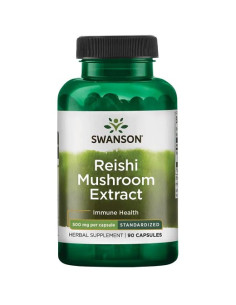
Swanson Superior Herbs Reishi Mushroom Extract provides a standardized extract from reishi mushroom fruiting bodies. Supplied in capsule form for structured daily use.
Food supplement with reishi mushroom extract, plant extracts, vitamins and minerals.
Reishinua bebible by Nua Biological provides a drinkable formulation combining mushroom extract, botanical extracts, bee-derived ingredients and selected micronutrients. The convenient vial format can be taken directly or mixed with water or juice for flexible daily use.
You need to login or create account
Save products on your wishlist to buy them later or share with your friends.