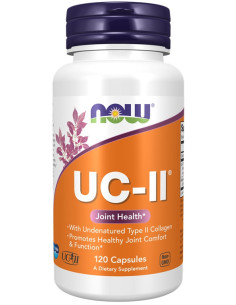
Some clinical trials suggest that specific collagen products may modestly reduce activity-related knee discomfort, particularly in active adults. The broader evidence for osteoarthritis is mixed, while rheumatoid arthritis studies show little consistent benefit. When an effect is reported, it usually appears after several months of daily use rather than overnight. This guide looks at the evidence, the differences between collagen formats, safety considerations and the label details worth checking before you buy.
This is a closer look at collagen specifically. For a broader comparison of glucosamine, omega-3, curcumin, collagen and other commonly researched ingredients, see our guide to joint-health supplements.
TL;DR:
- Collagen supplements may offer small, incremental pain reduction primarily in active adults with activity-related knee discomfort, taking at least three months to show effects.
- Most clinical trials involve short durations of 12 to 24 weeks and focus on specific formulations like hydrolysed peptides or undenatured type II collagen, which work through different mechanisms.
- The benefit appears modest and inconsistent across studies, with broader evidence for osteoarthritis being mixed and little benefit shown for rheumatoid arthritis.
- When choosing a product, verify whether it contains hydrolysed collagen peptides or undenatured type II collagen, as their mechanisms and doses differ significantly.
- EU rules do not allow food supplements to promise joint repair or arthritis treatment. In 2011, EFSA concluded that the evidence submitted for a collagen-hydrolysate joint-health claim did not establish cause and effect; the European Commission subsequently refused to authorise that claim.
Table of Contents
What clinical trials and reviews say about collagen for joint symptoms
The best-known trial in this space involved 180 physically active adults given 5 grams of specific collagen peptides daily for 12 weeks. Pain scores on a visual analogue scale (VAS) dropped more in the collagen group compared with placebo, a statistically significant difference favouring the supplement for exercise-related knee discomfort. That is a genuine finding, but it is worth sitting with the numbers for a moment: both groups improved. The supplement group simply improved more.
That pattern, real but incremental benefit, repeats across the wider literature. A narrative review covering both hydrolysed collagen peptides and native type II collagen found some trials report symptomatic improvement in osteoarthritis, while others show no meaningful difference from placebo. Patient-facing guidance from Arthritis UK reaches a similar conclusion: trial results for osteoarthritis are genuinely mixed, and rheumatoid arthritis trials show little consistent benefit. Rheumatoid arthritis is an autoimmune condition rather than primarily a wear-and-tear one, which may partly explain why a cartilage-support supplement behaves differently there than it does in osteoarthritis.
Not every study lands on the positive side. A more recent randomised, double-blind trial combining undenatured type II collagen (UC-II) with hydrolysed collagen in people with knee osteoarthritis found no significant difference against placebo at 12 weeks. That result matters precisely because it contradicts the more optimistic findings elsewhere. Science that only ever confirms what a product wants to hear is not science worth trusting.
Study snapshot: In the 12-week RCT of 180 active adults, the collagen group’s pain reduction outpaced placebo by roughly 6mm on the VAS scale, a modest but statistically real gap.
Several recurring problems limit how far any single trial can be extrapolated:
- Funding: many positive trials evaluate a specific, patented peptide blend, often with manufacturer involvement in study design or funding.
- Sample size: several studies involve fewer than 200 participants, which limits statistical power for detecting smaller effects.
- Formulation variety: doses range from tens of milligrams (UC-II) to several grams (hydrolysed peptides), and these are not interchangeable products.
- Follow-up length: most trials run 12 to 24 weeks, which says little about benefits or risks over years of use.
- Subgroup effects: benefits reported in young, active adults with exercise-related pain do not automatically transfer to older adults with established osteoarthritis.
Taken together, here is what the strongest studies actually establish, stripped of marketing gloss:
- Who was studied: mostly physically active adults with activity-related knee pain, plus separate osteoarthritis cohorts of varying age and severity.
- What was given: either hydrolysed collagen peptides (grams per day) or undenatured type II collagen (milligrams per day), rarely compared head-to-head.
- How long: the standard trial window is 12 weeks, occasionally extended to 24.
- What changed: pain scores fell more than with placebo in several trials, but the magnitude was small to moderate, and at least one recent trial found no difference at all.
The honest reading is that collagen supplementation has a coherent, plausible evidence base for certain joint symptoms, not a settled verdict that applies to everyone with joint pain.
Two entirely different mechanisms sit under the umbrella term “collagen supplement,” and confusing them explains most of the muddled marketing you will encounter.
Hydrolysed collagen peptides are broken down into short chains of amino acids before you swallow them. Once digested, specific dipeptides such as Pro-Hyp and Hyp-Gly turn up in the bloodstream, and preclinical work suggests they can stimulate cartilage cells to produce more extracellular matrix, the structural material that keeps cartilage resilient. The theory is nutritional: give the joint more raw material and signalling peptides, and it may respond by building slightly more of its own tissue.
Undenatured type II collagen (UC-II) works on a completely different principle. Rather than acting as a building block, it is thought to interact with gut-associated immune tissue through a process called oral tolerance, potentially influencing how the immune system responds to joint tissue. This is an immune-modulation model, not a supply-and-demand one, and it is administered in far smaller amounts, typically tens of milligrams rather than grams, because the mechanism does not depend on bulk delivery.
This is exactly why the phrase “type of collagen” gets misused so often in casual advice. Digestion breaks hydrolysed collagen from type I, type II, or type III sources down into broadly similar small peptides. So when you see “type I vs type II collagen” discussed as though the marketed source type of a hydrolysed product changes its joint mechanism, that distinction is largely academic once digestion has done its work. The meaningful line is not type I versus type II collagen in general. It is hydrolysed collagen (any source type) versus undenatured type II collagen specifically, because only the undenatured form retains the structure needed for the oral tolerance mechanism.
What actually matters when comparing collagen for cartilage support:
- Whether the product is hydrolysed peptides or undenatured type II collagen, since the two are not interchangeable and work through different pathways.
- The dose relative to the mechanism (grams for peptides, milligrams for UC-II).
- Whether the peptide composition is characterised at all, since many trials use a specific proprietary blend rather than generic collagen.
Pro Tip: Ignore front-of-pack claims about “type 1, 2, and 3 collagen blends” for joint support. Ask instead whether the label specifies hydrolysed peptides or UC-II, because that single distinction tells you far more about how the product is meant to work than any type-counting claim does.
Safety, tolerability and what EU rules allow a label to say
Collagen supplements have a generally favourable safety record across the trials reviewed, with mild gastrointestinal symptoms, such as bloating or a feeling of fullness, reported occasionally but rarely leading participants to withdraw. Serious adverse events are uncommon in the published research.
Two practical safety points are worth flagging before you buy anything:
- Source allergens: collagen is typically derived from bovine, marine, or porcine sources, so anyone with a relevant allergy or dietary restriction should check the label carefully rather than assume “collagen” means one single ingredient.
- Medicine interactions: if you take prescribed medication for arthritis, blood clotting, or any chronic condition, speak with a healthcare professional or pharmacist before adding a new supplement, since this article cannot assess your individual case.
Under EU Regulation 1924/2006, health claims on foods and supplements must be authorised and listed in the EU register of nutrition and health claims. Disease-treatment language such as “repairs cartilage” or “treats arthritis” is not appropriate for a food supplement.
There is also a concrete collagen precedent. In 2011, Gelita AG applied through the German authority for a claim that its collagen hydrolysate helped maintain joint health in physically active people. The evidence included a trial in 147 active student athletes. EFSA concluded that a cause-and-effect relationship had not been established, and the European Commission later refused to authorise the claim in Commission Regulation (EU) No 379/2012. This does not mean that every collagen study is negative; it means that clinical research and an authorised marketing claim are not the same thing.
For shoppers, the useful takeaway is simple: compare the form, dose and source of the product, and be cautious when a label or website promises a medical outcome.
Who might see benefit, and how long it realistically takes
The clearest signal in the research points to physically active adults dealing with exercise-related knee discomfort, the population studied in the 12-week trial of 180 participants discussed earlier. Some osteoarthritis subgroups also show a measurable, if modest, response. Rheumatoid arthritis sits in a different category entirely, with the available trials showing little consistent benefit, likely because its underlying immune mechanism differs from the wear-related joint changes collagen research tends to target.
Timing matters more than most people expect. Collagen is not a painkiller you take when a joint flares up.
Treatment durations across the RCTs reviewed commonly run 12 to 24 weeks, meaning daily use for at least three months before drawing any conclusion about whether it is working for you.
A few things to hold onto when setting your own expectations:
- Benefits reported in trials are small to moderate on pain scales, not a return to pain-free movement.
- Skipping days or using it inconsistently makes it far harder to judge whether it is doing anything at all.
- Individual response varies considerably. Some people in even the positive trials showed little change, which is normal for any supplement acting on a slow biological process like tissue turnover.
- If you notice zero change after three to four months of consistent use, that is meaningful information, not a reason to simply extend the trial indefinitely.
What to check on the label before buying a collagen supplement
Choosing well starts with reading past the front of the pack. Here is what actually tells you something useful:
- Form: confirm whether the product is hydrolysed collagen peptides or undenatured type II collagen (UC-II). These sit at different doses and work through different mechanisms, so the “right” one depends on which evidence base you are trying to align with.
- Peptide characterisation: better products name the specific peptide preparation used (rather than just “collagen peptides”), since trials that show benefit typically test a defined, standardised preparation, not generic collagen.
- Source species: bovine, marine, and porcine sources all appear on the market. Check this against any dietary restriction or allergy before adding to your basket.
- Allergen statements: look for clear labelling of the source material, particularly if you have a known fish or shellfish allergy and are considering a marine-derived product.
- Dose per serving: gram-level doses point to a hydrolysed peptide product; milligram-level doses point to UC-II. A mismatch between the stated mechanism and the dose on the label is a red flag worth questioning.
- Manufacturer transparency: brands that publish clear ingredient lists, batch information, and sourcing details give you more to verify than those relying on vague “premium quality” language.
- Form factor: powders mix into drinks and allow flexible gram-level dosing, which suits hydrolysed peptide products; capsules suit the smaller milligram doses typical of UC-II.
- Companion ingredients: some joint support formulations pair collagen with other compounds such as vitamin C, which plays a role in normal collagen formation in the body. Compare these against straightforward glucosamine and chondroitin formulations if you are weighing up which ingredient category fits your goals.
Pro Tip: Before buying, search the product name alongside “peptide” or “UC-II” to see whether it matches, or is genuinely distinct from, the specific preparations used in published trials. A close match to a studied preparation is a far stronger signal than any adjective on the packaging.
Some shoppers also look at complementary categories, like digestive enzyme blends containing bromelain, alongside their joint support routine. Treat these as separate purchasing decisions rather than assuming one ingredient’s evidence extends to another.
Reading the evidence honestly
Here is where I will push back on how this topic usually gets written up. Most collagen content online either oversells the trial data (“collagen rebuilds your cartilage”) or dismisses it entirely (“it’s just protein, save your money”). Both takes are lazy. The RCT evidence for activity-related knee pain is real and reasonably specific. The evidence for osteoarthritis broadly is genuinely mixed, and pretending otherwise, in either direction, does readers a disservice.
What gets underestimated most is how much the mechanism matters when choosing a product. Treating hydrolysed peptides and UC-II as the same thing wearing different labels is like treating ibuprofen and paracetamol as interchangeable because both are “painkillers.” They are not, and a shopper who understands that distinction makes a far better decision than one chasing the word “collagen” on a front label.
An approach favouring transparent sourcing from established brands and describing formulations rather than making disease claims is advisable because EU health-claims rules and good evidence hygiene point in the same direction. That is not a compliance afterthought. It is the only honest way to sell a supplement whose evidence base is promising but still unfolding.
— Lexa
Where to find collagen and joint support products at Vita-Store
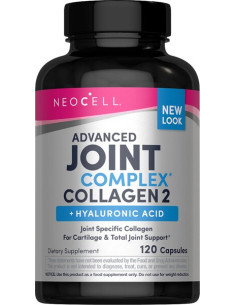
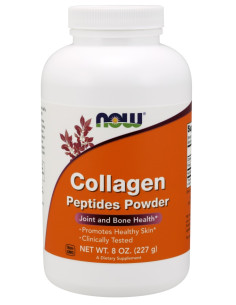
If you have read this far, you already know that no single product can promise to fix a joint. Vita-Store instead offers several clearly labelled formats, including hydrolysed collagen peptides, undenatured type II collagen and broader joint-support formulations.
The useful comparison is not which package makes the boldest promise, but what the product contains and how much it provides. The recommendations below include different formats and brands so you can compare them against the distinctions explained in this article.
Primary sources and further reading
The clinical discussion in this article draws on the 12-week randomised controlled trial in 180 active adults, a broader review of collagen composition and joint-health evidence, a recent placebo-controlled trial, and Arthritis UK's patient guidance. The regulatory section uses the EU health-claims register, EFSA's 2011 scientific opinion and the Commission regulation that followed it.
This article is general information, not a substitute for advice from a qualified doctor. Consult a qualified healthcare professional about your own circumstances before acting on anything here.
Sources
Recommended